Posts

Showing posts with the label interesting

Mick Jagger's Interesting Family

Image
Today's post is a collaboration between StaDaFa.com and my other blog, ToHippo.com. Mick Jagger has got great-grandchildren older than his youngest child.  His children range in age from 7 to 53. Other interesting facts about Mick Jagger's family: Mick Jagger has children spanning over five decades. His first child, Karis, was born in 1970, while his most recent child, Deveraux, was born in 2016. This means there’s a 46-year age gap between his oldest and youngest child. His grandchildren span over many decades too. His first grandchild, Assisi was born in 1992, while his most recent one, Eugene, was born in 2020, giving them a 28-year difference. Melanie, Mick’s most recent partner, born in 1987, is younger than 4 of Mick’s children. She is actually 17 years younger than his oldest child, Karis, and just 5 years older than his oldest grandchild, Assisi. Mick Jagger’s youngest son, Deveraux, born in 2016, is 2 years younger than Jagger’s first great-grandchild Ezra, born in 201...
Share Of University Degrees Going To Women

Image
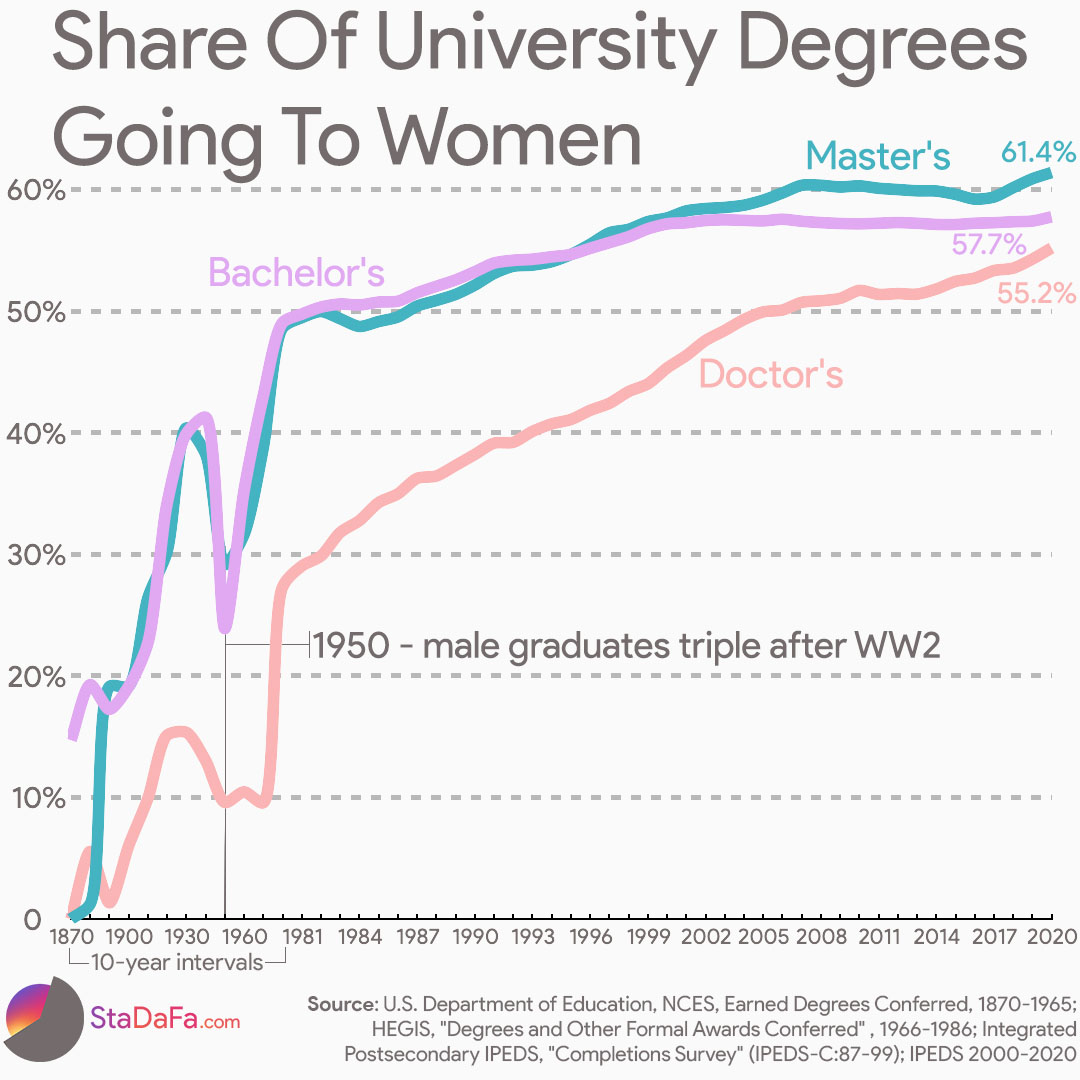
This week we take a look at the share of university degrees going to women. Our data begins in the 1869-1870 school year when 1378 women got a Bachelor's degree ,   and none got either a  Master's or a  Doctor's degree.  Things may look a bit bleak, but it must be taken into account that the numbers for men were 7,993, zero, and 1 respectively. While the numbers for women were low at the time, they began to steadily increase over the years and for the 1939-1940 school year, 76,954 got a Bachelor's, 10,223 got a Master's and 429 got a Doctor's degree. Unfortunately, there is no data available for the years the United States participated in World War II . However, we can compare the number of degrees awarded in 1940 and 1950 to see the difference in both the numbers and the genders of the recipients. In 1940, a total of 186,500 bachelor's degrees were given, with 109,546 going to men and 76,954 going to women.  In 1950, the number of b...

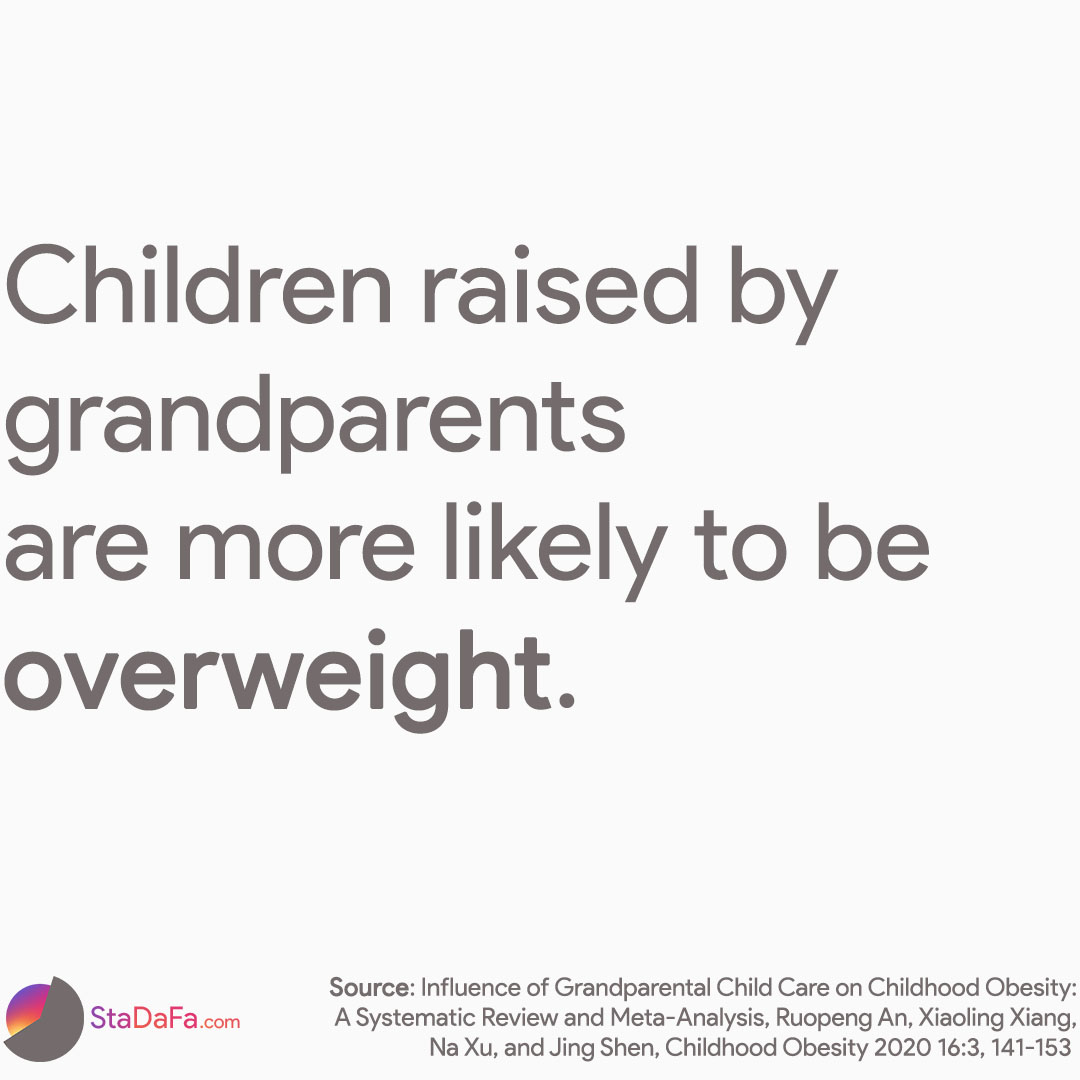
Children raised by grandparents are more likely to be overweight

Image
That's according to a systematic review and meta-analysis of 23 studies conducted in the United States and eight other countries by a team of researchers in the Brown School at Washington University in St. Louis. The review found that children who were cared for by grandparents had nearly 30% higher risks for being overweight or obese. The findings don't stop there though. Children with normal-weight parents and obese grandparents had twice the risk of being overweight themselves than children with normal-weight parents and normal-weight grandparents, suggesting that grandparents had an influence on child weight status distinct from parental influence.  The fact that grandparents now have an increased life expectancy, and the fact that there has been a rise in single-parent households and working moms, has led to an increase in the number of grandparents who provide extensive child care to their grandchildren. Today's grandparents are more than occasional visitors an...

COVID-19 and Search Interest On Google

Image
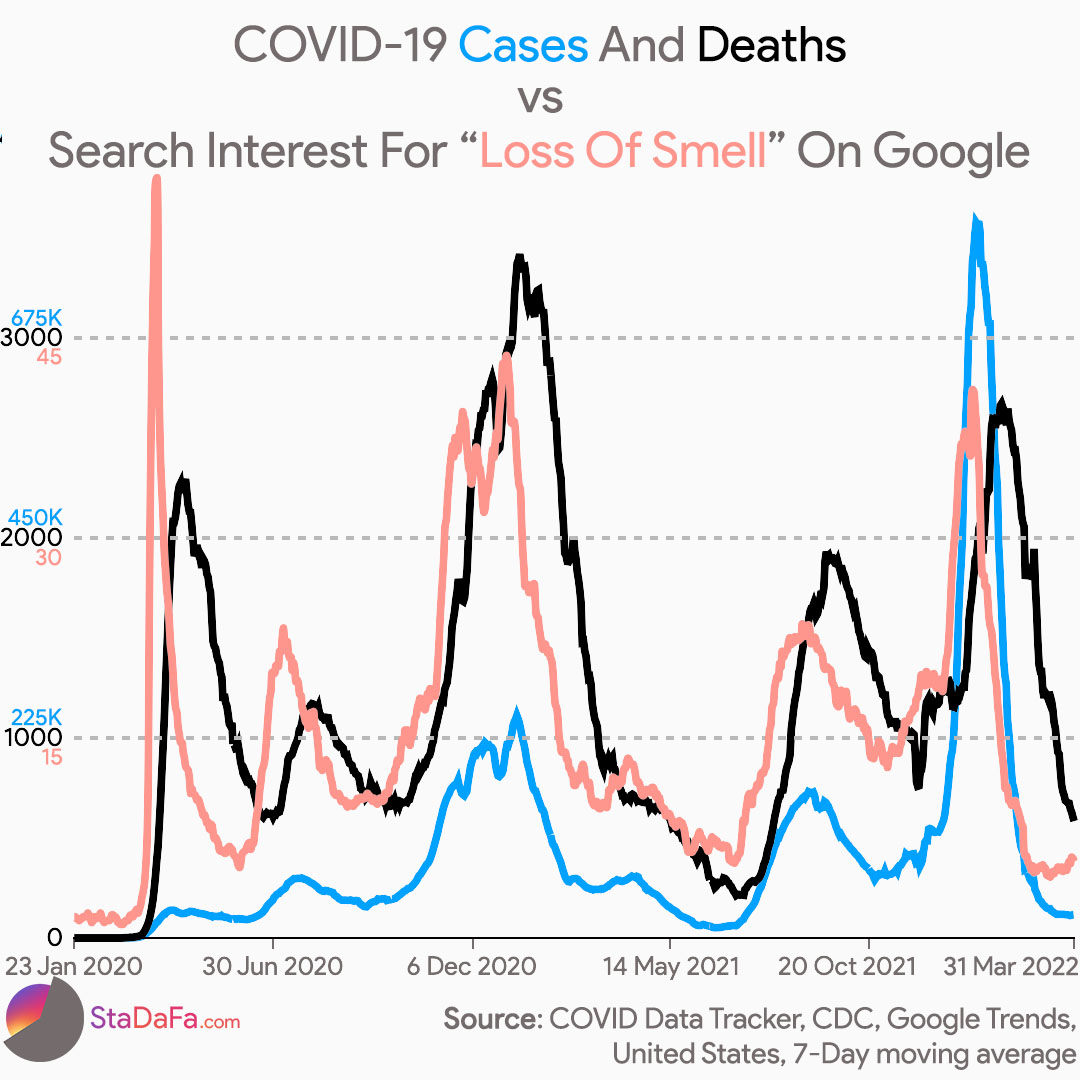
  Anosmia, or the loss of smell, is one of the most common manifestations of COVID-19, and one of the symptoms that differentiates it from other diseases with similar characteristics.  As it is clearly evident in the graph, during the first months of the pandemic when few things about COVID-19 were known and testing was scarce, many individuals noticed the loss of smell and turned to the internet to find out what was wrong. The magnitude of these searches at the end of March 2020, translated a few weeks later to hundreds of deaths.  The story repeated itself many times, throughout all COVID-19 waves. People noticed they couldn't smell, searched it on Google, and then a few days later cases were up, and a few weeks later deaths rose as well.  The average interval between the spikes on Google Search Trends (GST) and Cases is about 9 days, while between GST and Deaths is 18 days. Thus Google search interest can be considered a good indicator of future Covid-19 outbreaks...